Five Strategic Moves for Your First Team Meeting as a New Manager
If you want to succeed in your first team meeting as a new manager or team lead, you need to leverage your team's expertise, not give orders based on your own.
After nearly 20 years coaching managers (now coaching Fortune 500 senior leaders), a clear pattern emerges: the managers who try hardest to showcase their expertise struggle the longest to earn their team's respect.
Consider this scenario:
A brilliant engineer at a manufacturing company bombed her first team meeting. She thought leadership meant having all the answers. She was terrified. She froze up and almost quit in her first month.
What changed everything?
Learning that first meetings aren't about providing expertise. They're about decoding team dynamics (like identifying who the real influencers are before you even speak).
She went from paralyzed to confidently leading a team that actually wanted to follow her.
Here are the five strategic moves for your first team meeting that will position you as a leader your team respects from day one
Move #1: Don't Try to Be the Expert
Your job has changed.
The day you became a manager, you're no longer paid to do the work. You're paid to get work done through others.
First-time managers think they need to prove they know everything. This backfires immediately because you don't.
Let's face it: Your team already knows you were good at your job. That's why you got promoted. That's why you're there.
What they don't know yet:
- Can you lead?
- Can you support them?
- Can you remove obstacles?
- Can you provide air cover?
(That last one is really one of the most important.)
The Command and Control Trap
Technical experts struggle the most in leadership transition when they go into command and control mode:
"Now that I'm in charge, we're going to do it my way because I know best."
The shift from being the go-to problem solver to teaching others how to solve problems is mission number one.
In your first meeting, position yourself as someone who leverages their expertise, not overshadows it.
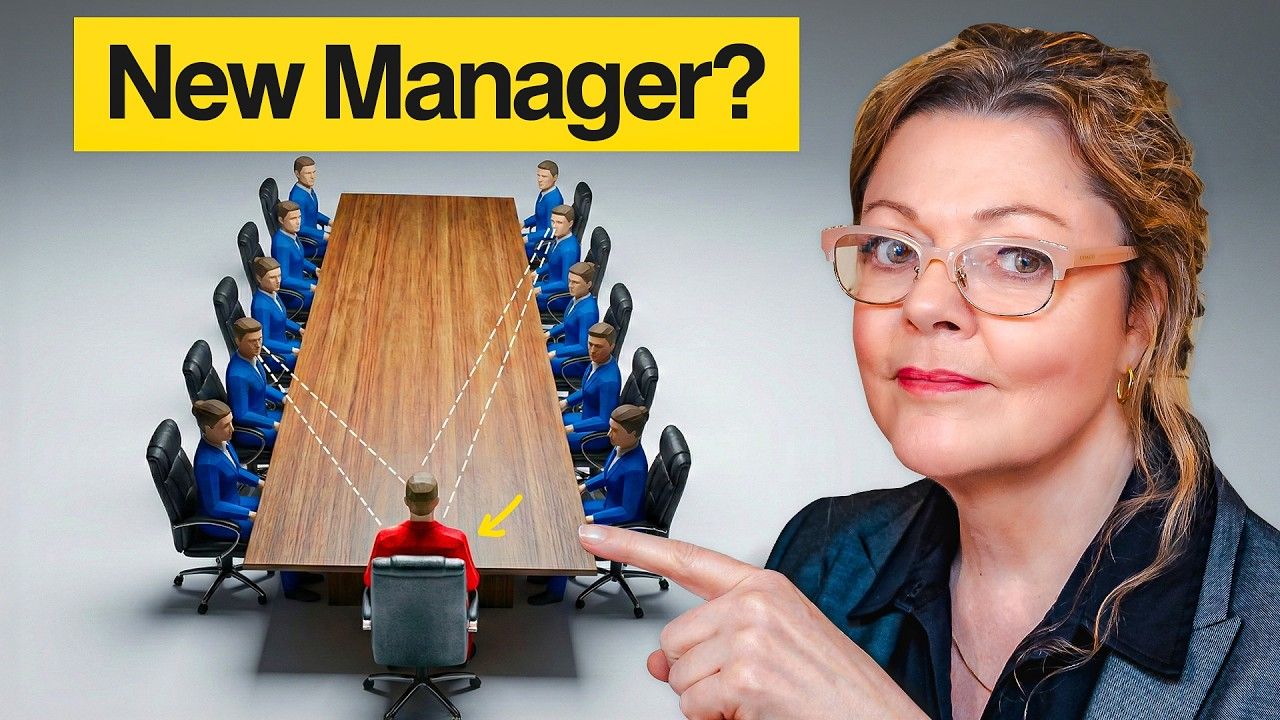
Move #2: Decode the Room Before You Design Anything
Apply stakeholder mapping to your own team.
In that first meeting, observe:
- Who speaks first?
- Who do others look to when you ask questions?
- Whose opinion seems to carry weight?
These are your informal leaders. They have influence whether you acknowledge it or not.
You don't need to call them out publicly or acknowledge this in any way. But keep it in the back of your head. It's really important. You need to know who they are.
Why This Matters
If the informal leader doesn't buy what you're selling, neither will the team.
This is Fortune 500 thinking. It's systems thinking. It's a little more sophisticated than what might happen in smaller companies.
If you apply this to your first meeting and start decoding the dynamics before taking any action, you'll be way better off.
Think in Systems
Consider the system they're operating in:
- Other teams
- Stakeholders
- Departments who impact the dynamic
Don't walk in with a plan. Walk in ready to gather intelligence.
Your first meeting is a discovery session, not a presentation. You're not the new sheriff in town.
Move #3: Design Clear Communication Boundaries From Day One
This is another big mistake new managers make:
"My door is always open."
That sounds wonderful, doesn't it? Don't do it.
This is like opening the barn door. Here's what happens:
Your team will either interrupt you constantly OR never come to you at all (because they don't know when they're interrupting you).
Be Specific About Four Things:
1. When should they figure it out themselves?
They have other resources. Common documents. Peers. These things they can figure out themselves.
But something stakeholder-facing? They might need your experience and expertise. That's high impact. You're going to want to know about that.
2. How do you prefer to communicate and when?
Email? Slack? Face-to-face for complex issues?
One manager is constantly getting text messages day and night because someone thinks they're "managing up" by keeping in touch. Now this becomes critical feedback that has to be delivered later.
You're better off setting these boundaries from day one.
3. What decisions can they make without you?
Be explicit.
There's a VP (reporting to an SVP) who had to get specific about dollar amounts he could decide himself. He was constantly checking in with his boss, who finally said, "Man, you've got to take some ownership here."
They got very specific: What does that actually look like? What absolutely requires approval?
Think about that for yourself.
4. What absolutely requires your approval?
Draw clear lines.
Frame This as Partnership
This isn't being rigid. This is setting your team up for success.
If you set these boundaries now, it'll be much easier than later when it becomes critical feedback.
Frame it: "Here's how we're going to work together most effectively."
Just lay it out for them.
Move #4: Deploy Strategic One-on-Ones
Announce in your first meeting:
"I'll be scheduling one-on-ones with each of you over the next few weeks."
Frame these as discovery sessions. Not performance reviews. Not a dog and pony show.
What You're Gathering:
What's working well that I should leave alone?
What's one thing that really needs to change (in your opinion)?
How do you prefer to be managed?
(This is a bit vague. Make it more specific.)
What areas do you feel confident enough that you'd like autonomy?
What areas would you like my support or would you like to upskill?
What are your career goals?
(Good to know so you can align them with opportunities.)
What obstacles are in your way so I can help remove those?
Why This Matters
You're creating relationship equity. You're building trust individually before making any team-wide changes.
Your team is not one-size-fits-all.
Take notes. Don't forget that. You will think you're going to remember, but you won't. Trust me.
This information is absolute gold for understanding how to manage and motivate them later. What to delegate. What to hold them accountable for.
These conversations will tell you where your quick wins are.
Don't leave it up to them. Schedule the meetings yourself.
Move #5: Don't Make Any Immediate Changes
You're going to feel urgency (even anxiety) to make your mark immediately.
It's a very strong urge. You have to resist it.
The first 30 days (minimum): just observe and learn.
If you're at a more senior level: 90 days.
Why Patience Wins
You have zero relationship equity at this point.
If you try to make changes now, you're going to encounter resistance. No matter what.
You don't know what's broken or why things are the way they are.
Your team's probably been through a number of changes already. They're watching to see if you're another leader who disrupts for an ego rush.
(Hopefully, that's not you.)
What to Say in Your First Meeting
"I'm not here to change everything on day one. I'm here to learn from you, to understand what's working, and then we'll figure out together what needs to improve."
This builds trust faster than any grand vision speech.
The Exception
If something is truly broken and urgent, address it. But explain why. Explain why you're doing that now.
Patience beats a fast change that backfires. That looks like thrashing. That is not a good look.
The Bottom Line
The five strategic moves for your first team meeting as a new manager:
- Don't try to be the expert (leverage their expertise, don't overshadow it)
- Decode the room before you design anything (identify informal leaders)
- Design clear communication boundaries from day one (set expectations now)
- Deploy strategic one-on-ones (build relationship equity individually)
- Don't make any immediate changes (observe for 30-90 days first)
Your first team meeting isn't about proving you belong.
It's about positioning yourself as a leader your team actually wants to follow.
You're not the new sheriff in town. You're the person gathering intelligence.
There's a difference.
Ready for your first team meeting? Walk in ready to observe, decode, and build trust—not to prove yourself.
Let connect!