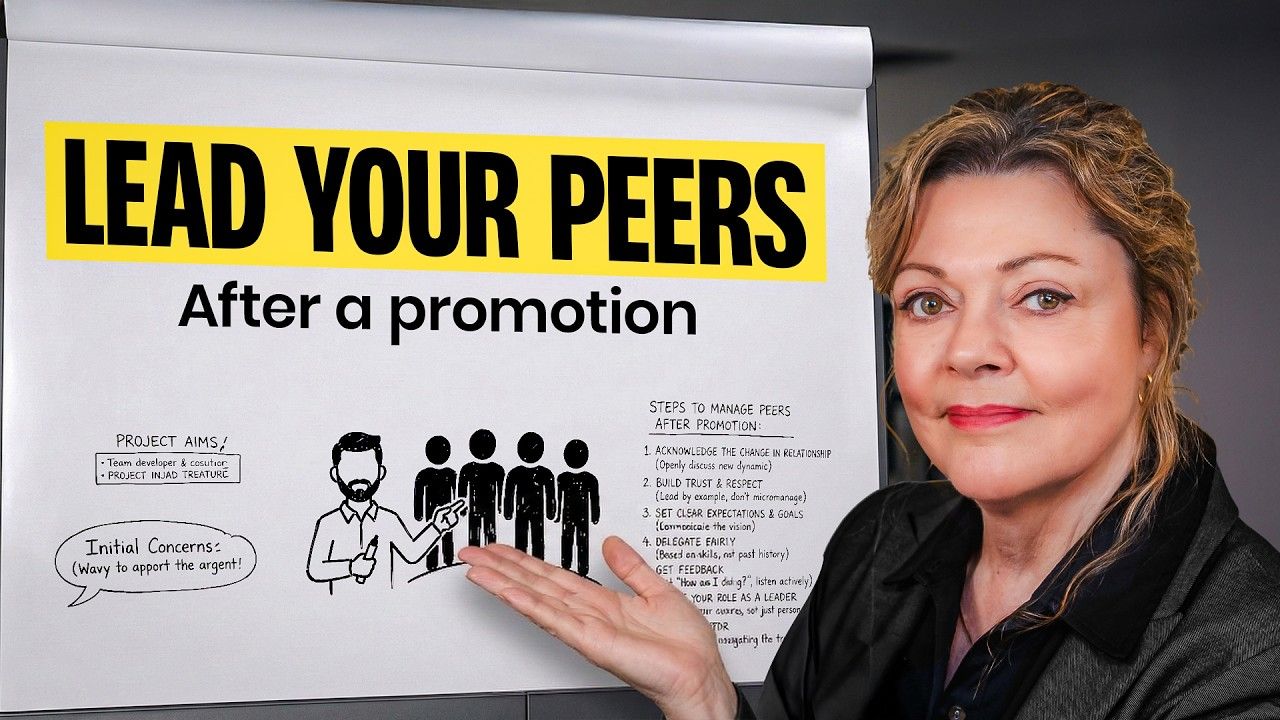
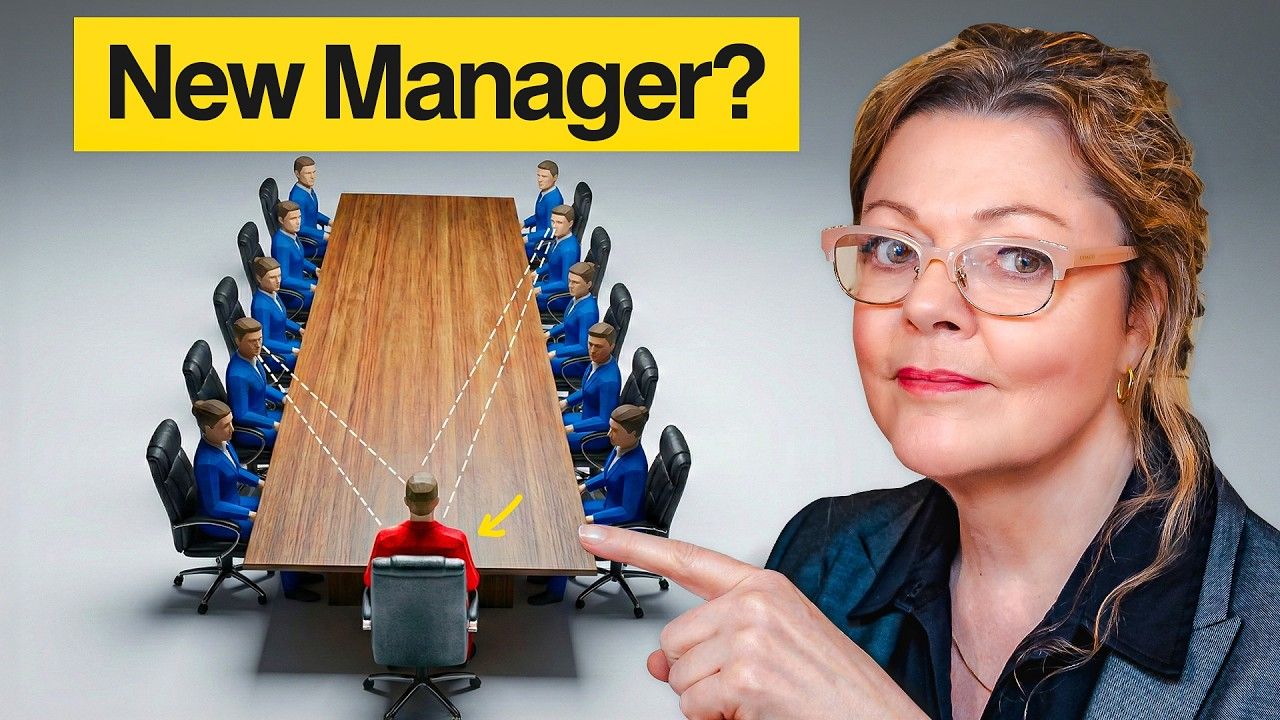
Five Critical Things Every New Manager Needs to Know
If you want to succeed as a new manager, you need to stop trying to fix everything in your first month.
After over 3,000 hours coaching managers (many at Fortune 500 companies), a clear pattern emerges: the managers who rush in and make their mark in the first weeks are the ones who struggle the most.
Consider this scenario:
A manager in her 20s is promoted to lead a team of men in their 40s and 50s with decades more experience. Terrified. Deer in the headlights. Feeling like she has to prove herself immediately by changing things, showing value, making an impact.
What turned everything around?
She did the exact opposite.
She stopped trying to change anything. She spent her first month observing, asking questions, and building trust.
Within 90 days, her team wasn't just respecting her. They were championing her ideas and supporting her success.
Here are the five critical things every new manager needs to know before starting at a new company, in a new role, or a new division.
Tip #1: Don't Expect to Know It All (Leverage Your Team's Experience)
You climbed the ladder because you were the expert.
Management is a completely different game.
You're trying to multiply results through others. Your job is not to be the smartest person in the room anymore. Your job is to leverage the experience and expertise around you.
Reverse mentoring is real and powerful.
The Cautionary Tale
A manager at a company was there for only three months, managing people with 14+ years of seniority. He pretended to know everything.
This started giving him impostor syndrome. He made enemies. People watched him drown.
What went wrong: He tried to flex his expertise instead of asking questions.
What he lost: Credibility, team support, isolation.
The Better Approach
"Show me how this is done here." "Walk me through this."
Ask questions. You don't have to apologize for that. The CEO wouldn't know how to do your job. Think about Undercover Boss.
Frame it as learning the company's way (not admitting ignorance).
Your team wants to share their knowledge. It makes them feel valued and secure. That's really important these days.
Why This Matters
Moving up is scaling up.
Going up to management is a big change. You're no longer paid to execute. Really take that in for a minute.
You're paid to develop your team so they can do more and do better.
Tip #2: Own It From Day One (Even If You Had Nothing to Do With It)
You are walking into situations you didn't create.
Maybe there's a mess. Maybe there's tension. Maybe there's a failed project or two. But that's why you're there.
Your natural instinct will be to distance yourself. Blame your predecessor. Explain it's not your fault.
Do the opposite.
Take responsibility immediately. Even if you had zero involvement, it's yours now. No exceptions.
Why This Is Critical
Never speak negatively about your predecessor.
Do not deflect responsibility. You are modeling the behavior you want to see from your team from day one.
Your team is watching how you handle accountability. If you blame others, you're teaching them it's acceptable to do the same.
You're a lot more visible now. Everything you say sets a standard.
What to Say Instead
Acknowledge past efforts with respect:
"This is mine now. Here we are. How do we move forward?"
No looking backward unless it's a constructive post-mortem on a project. Focus on constructive solutions. Forward motion, not explanations.
The Predecessor Rule
Even if they were fired. Even if everyone knows they failed. Even if you're brought in specifically to fix their mistakes.
Show respect for the person who came before you.
This demonstrates professionalism and builds trust with everyone around you.
Real-World Example
Bad approach: "Well, people, I had a good look at everything here. To be honest, I'm not surprised we're not the market leader. There's a lot that needs to change."
Good approach: "I see the challenges. I respect the work you've all done to date. Now, let's talk about where we want to go next."
Hear the difference? It's huge.
Tip #3: Don't Make Immediate Changes (Observe First)
You were hired to improve things. Everyone expects you to have a plan. The pressure to make your mark is intense.
You see inefficiencies everywhere.
The first 30 days (minimum): observation mode only.
At senior levels, this has to stretch to 90 days.
Why Patience Wins
Change (under the best of circumstances) will get you resistance. It's just human nature.
You have no relationship equity yet. Zero.
Remember that before making any changes.
You don't know:
- The unwritten rules
- The power and decision-making dynamics
- Whether your team is change-weary from previous re-orgs
What Observation Mode Looks Like
Map out the organization. Get a grip on who's who.
Learn who decides what and why. Get a feel for the culture, hidden agendas, unspoken agreements.
Ask questions like: "How did this process come to be?" Listen for context.
Hold off sharing your opinions. Keep asking questions.
The Small Wins Strategy
Focus on building trust first.
Rack up some quick, low-risk wins. Your team will be happy to tell you what they want to change. Take those and consider them.
You're creating tailwinds for future changes instead of creating headwinds for yourself now.
Real-World Example
A manager in her 20s at a manufacturing company faced cultural and seniority differences. She was Latina. Her team was white American men, all over 40.
She called a meeting and offered transparency instead of changes:
"I respect your experience and I need to lean on you. I'm asking you to mentor me in areas I have no experience."
(Vulnerability is a strength.)
"Let me know in our one-on-ones how I can support you. Later, tell me about changes you'd like to make and things you'd like to do more of. When I seek your opinions on decisions, know that I'll be the one making the decision, but I really want your input."
The result: Huge stress relief. Her team stood with her. She established authority without forcing change. She started building equity in those relationships from day one.
The Real Question
What appetite does the team have for change?
What have they experienced in the last three years? Are they change-weary?
Get the lay of the land before making moves.
Tip #4: Introduce Yourself Strategically (Gather the Team, Focus on Them)
Most managers rely on one-on-ones to introduce themselves.
The problem: It takes weeks to schedule everyone. This creates an awkward silence in the gap.
The first person you meet downloads everything to everybody else. This creates bias before you've met everyone.
The Better Approach
Gather your team immediately.
Don't wait for the announcement email or the one-on-one sequence.
Keep your intro brief. Then flip the spotlight to them.
Why This Works
- Models your authority immediately (you're convening them)
- Shows you're communicative and transparent
- Demonstrates you care about their concerns
- Gives them the respect of your time and attention
- Prevents rumors and misunderstandings from spreading
Remember: They're critical to your success. Acknowledge that upfront.
What to Say
Brief self-intro:
- Your name
- Years in the industry
- Previous company and experience
- Previous role
Then switch to why you're excited:
- What interested you in this company, role, or team's reputation?
- What challenges have you heard about that intrigued you?
Open the floor to Q&A:
- Dispel rumors
- Address concerns head-on
- Let them talk
- What's on their minds?
- What do they need from you?
The Psychology
People fear the unknown. You're a new manager. That equals uncertainty about their future.
The faster you create certainty and connection, the faster you build trust.
This isn't about impressing them. It's about seeing them.
What NOT to Do
- Don't launch into your vision or plans yet
- Don't talk about all the changes you're going to make
- Don't make it about you and your credentials
- Don't skip this step and go straight to work (missed opportunity)
Tip #5: Focus on Results, Not Process (Avoid the Micromanagement Trap)
You were hired because things need to change and you know how to do things exceptionally well.
You look at your team and see inefficiencies everywhere. You know a better way to do almost everything they're doing.
The temptation to control is overwhelming.
But your job is to focus on the outcome (getting from A to B), not the process. At least not right now.
If the quality of work is acceptable, you can make process improvements later.
Worrying about "how" means the micromanagement train is in full steam ahead. You don't want to be on that train.
Why This Matters
You have to trust that how they've gotten things done is good enough for now.
Your team has institutional knowledge you don't have yet.
Imposing your way creates resistance and resentment.
You want ownership and accountability. Micromanagement kills both.
What to Focus On Instead
Set clear deliverables and deadlines.
Define what success looks like:
- Quality standards
- Timelines
- Stakeholder satisfaction
Check in on progress regularly (without hovering).
Remove obstacles they flag. Address quality issues right away (not "your way versus their way").
When Process DOES Matter
Behaviors that violate company values: Address one-on-one
Compliance and risk issues: Non-negotiable
Team dynamics that are toxic: Requires early intervention
But how someone formats a report or structures their day? Let it go.
The Team Charter Approach
If you need to address behaviors, do it collectively.
Use a start/stop/keep exercise in a team meeting. Let the team define how they work best together.
Focus on what you want, not what you don't want.
This creates buy-in and ownership instead of top-down mandates.
The Bottom Line
The five things you absolutely need to know before starting as a new manager:
- Don't expect to know it all (leverage your team's experience)
- Own it from day one (even if you had nothing to do with it)
- Don't make immediate changes (observe first)
- Introduce yourself strategically (gather the team, focus on them)
- Focus on results, not process (avoid micromanagement)
The managers who succeed aren't the ones who change everything in the first month.
They're the ones who build trust, observe the landscape, and create relationship equity before making a single change.
Your first 90 days aren't about proving yourself. They're about positioning yourself.
There's a difference.
Ready to start your new role with a clear game plan? Let's connect.
Focus on observation, trust-building, and strategic positioning from day one.